Confess, Pray, Heal: What James 5:16-17 Teaches Us About Men's Mental Health

A reflection on confession, prayer, and the power of honest community — and why they matter for a man's inner life
Introduction
There's a particular kind of loneliness that doesn't come from being physically alone. It comes from being surrounded by people — coworkers, friends, even family — while carrying something no one else knows about. A Sin or Sinfulness that has become a struggle, a failure, and a weight that's been managed in silence for so long it starts to feel permanent.
James 5:16-17 speaks directly into that condition. It doesn't offer a technique for coping quietly. It prescribes something almost uncomfortable in its directness: confess your sins to one another, pray for one another, so that you may be healed. And then, almost as if anticipating the objection that this kind of prayer is only for spiritual giants, James points to Elijah — a man with a nature like ours — as proof that ordinary, flawed people are exactly who this promise is for.
This post walks through these two verses and explores what they reveal about honesty, community, and healing — and why they make such a compelling case for Christ-centered counseling, particularly for men.
The Context: A Letter About Real Life
James doesn't write in abstractions. His letter is famously practical — faith and works, taming the tongue, caring for the poor, and patience in suffering. By the time we reach chapter 5, James has just finished talking about prayer for the sick and the elders of the church anointing them with oil. Verses 16 and 17 extend that thought: healing — physical, emotional, and spiritual — happens in the context of honest confession and committed prayer, not isolation.
This matters because it reveals how James understood the human condition. He doesn't assume people can pray their way to wholeness in private, unseen by anyone. He assumes healing is often communal. It requires other people who know the truth about you and choose to pray for you anyway.

James 5:16 — "Confess Your Sins to One Another"
The verse begins with a command that goes against our base instincts: confess your sins to one another, and pray for one another, so that you may be healed. The prayer of a righteous person, James adds, is powerful and effective.
Notice the order. Confession comes before healing, not after. James isn't describing confession as a formality or a spiritual box to check — he's describing it as a mechanism through which healing actually happens. Something about naming the truth out loud to another person, in the context of prayer, unlocks what private, silent struggle cannot.
For men, this verse confronts a deeply ingrained instinct: keep it to yourself, handle it privately, don't let anyone see the full picture. That instinct isn't just a personality trait for many men — it's a trained response, reinforced by years of cultural messaging that vulnerability is risk and self-sufficiency is strength. But James suggests the opposite. Isolation isn't strength; it's often the very thing standing between a man and his healing.
This is where Christ-centered counseling offers something distinct. A counselor operating from this framework provides exactly the kind of space James describes — a person to whom a man can confess honestly, without performance, and who will meet that honesty with prayer rather than judgment. It's not confession in a formal, ritual sense necessarily, but the same underlying dynamic: truth spoken aloud, in relationship, held in prayer.

Why "One Another" Matters
It's worth pausing on the phrase "one another." James isn't describing confession to God alone — that's assumed elsewhere in Scripture — he's describing confession between people. This is mutual, relational, and reciprocal. It requires trust and a safe person or community willing to receive that trust without weaponizing it.
Many men have never had this kind of relationship modeled for them. Friendships between men can often stay at the level of shared activities — sports, work, hobbies — without ever developing the depth required for this kind of honesty. That's not a moral failing; it's often simply the absence of a space built for it.
This is part of why counseling matters as a starting point, even if it isn't the final destination. A good Christ-centered counselor can become a first "one another" — a person with whom a man practices the very honesty James describes, in a setting built specifically to hold it well. For many men, practicing honesty in counseling becomes the template for deeper honesty in marriage, friendship, and church community afterward.

James 5:17 — "Elijah Was a Human Being, Even as We Are"
The second verse anchors this teaching in a real example: Elijah was a human being, even as we are, and he prayed earnestly, and his prayer had powerful results.
This detail is deliberate. Elijah was one of the most dramatic prophets in the Old Testament — he called down fire from heaven, confronted kings, and outran chariots. If James wanted to describe an unreachable spiritual example, Elijah would be an odd choice, except for one thing: right after his greatest victory, Elijah collapsed into despair, fear, and exhaustion, asking God to let him die. He is, in other words, a picture of both extraordinary faith and very ordinary human struggle.
James's point is precise: Elijah's power in prayer wasn't due to being superhuman. It was because he was human, and he prayed earnestly anyway. This should reframe how men think about their own struggles. Elijah's story includes a season of depletion so severe he wanted to stop living — and Scripture doesn't hide that detail or treat it as disqualifying. God met him there, provided for him physically, and eventually restored him to purpose.
For men wrestling with anxiety, depression, burnout, or despair, this is significant. Struggle is not evidence of spiritual failure or weak faith. It's evidence of being human — the same nature James explicitly names as Elijah's. The way forward isn't proving you're above struggle; it's engaging honestly with God and others in the middle of it, the way Elijah eventually did.
Confession, Prayer, and Counseling Working Together
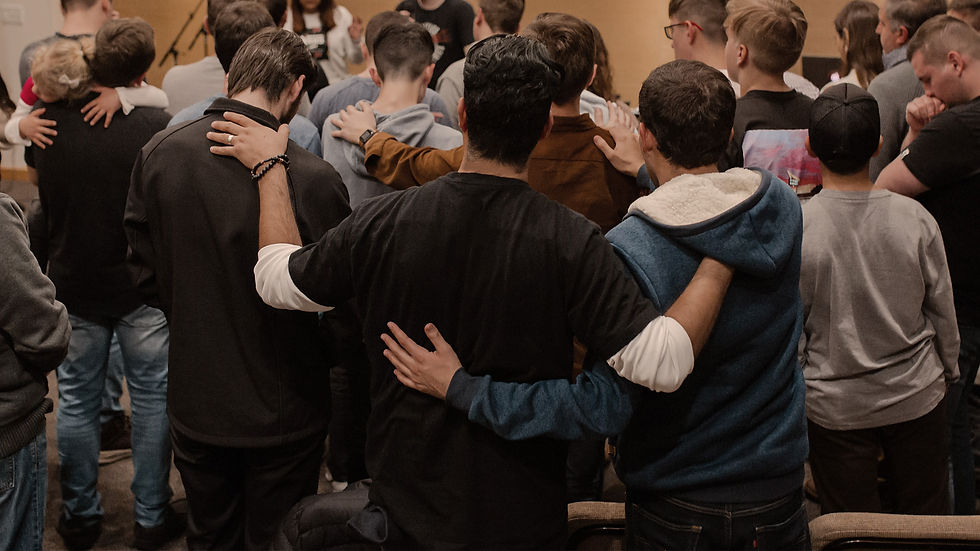
Put James 5:16-17 together, and a simple but demanding pattern emerges: name the truth honestly, bring it into relationship, and hold it in prayer — trusting that even ordinary, struggling people experience real, powerful results.
Christ-centered counseling operationalizes this pattern in a modern, structured way. It gives a man:
A confidential relationship where honest confession is possible without fear of judgment
A counselor trained to help him understand and process what he's confessing, not just hear it
A framework where prayer and Scripture are integrated into the healing process, not set aside as separate from it
A living example — like Elijah's — that struggle and faith are not mutually exclusive
This combination matters because confession alone, without support, can feel exposing without being healing. And clinical support alone, without a spiritual framework, can miss the deeper resource James points to: the power of prayer offered by a righteous person on your behalf.
Practical Takeaways
Find one trustworthy person. You don't need a crowd. James describes "one another" — even one honest relationship can be the beginning of healing.
Say the true thing out loud. Confessing your sin to another person is part of the healing process James describes, not a separate step from it.
Remember Elijah. Faith and despair have coexisted in Scripture's most powerful figures. Struggling doesn't disqualify you from being used or healed.
Let prayer be active, not passive. James describes earnest, effective prayer — not a formality, but a real request made with expectation.
Consider counseling as your "one another." If you don't yet have a safe person to confess to, a Christ-centered counselor can be the structured, confidential starting point James describes.
Conclusion
James 5:16-17 refuses to let healing stay private and hidden. It insists that confession, honest relationship, and earnest prayer are part of how real healing happens — and it grounds that claim in the story of a man who was, in his own words, just like us. For men carrying silent struggles, this passage is both a challenge and a relief: a challenge to stop managing pain alone, and a relief to know that struggle itself doesn't disqualify anyone from healing or usefulness. Christ-centered counseling exists to be a faithful place to live this out — a space to confess honestly, be prayed for earnestly, and discover, like Elijah did, that even ordinary, struggling people are exactly who God meets and heals.


Comments